
Learn AI · Level 4 · Frontier view · step 16 of 16
From AI literacy to building AI: a roadmap
The Learn AI path teaches you to understand AI. This roadmap is for the next step: building it. Six stages take you from your first line of Python to an AI app running in production, each with what you'll be able to do, the best courses (most of them free) and a small project to prove it. It's a real commitment, so the times are honest.
Stage 0: you've done the Learn AI path. You know what AI is, how models learn and the words people use. The path is for understanding AI; this roadmap is for building it.
- 1Python6–10 weeks
- 2Maths6–8 weeks
- 3Classical ML2–3 months
- 4Deep learning2–3 months
- 5LLM apps1–2 months
- 6Production1–2 months
Be honest about the time. At 8–10 hours a week, the six stages take roughly 8 to 13 months, longer if you're new to maths. You can build a first small project within 2 to 3 months. Being ready for a job usually takes a year or more, and depends on your projects more than on certificates. (Our estimates, not a promise.)
- 1
Learn Python
6–10 weeksAlmost all AI work is done in Python. You don't need to become a software engineer, but you need to read and write it comfortably.
You'll be able to
- Write scripts with functions, loops and conditions
- Load, clean and save data files
- Find and fix your own bugs, and write simple tests
- Save and share your code with Git and GitHub
Our picks
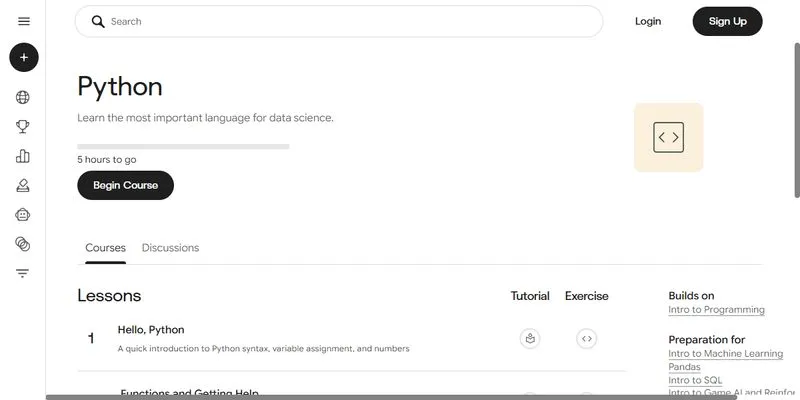 PythonKaggleStart here: the basics in about five hours.Course · Beginner · Free, with a Kaggle account
- Automate the Boring Stuff with PythonAl SweigartPython for office work: spreadsheets, PDFs and emails.Book · Beginner · Free online; paid print and ebook editions
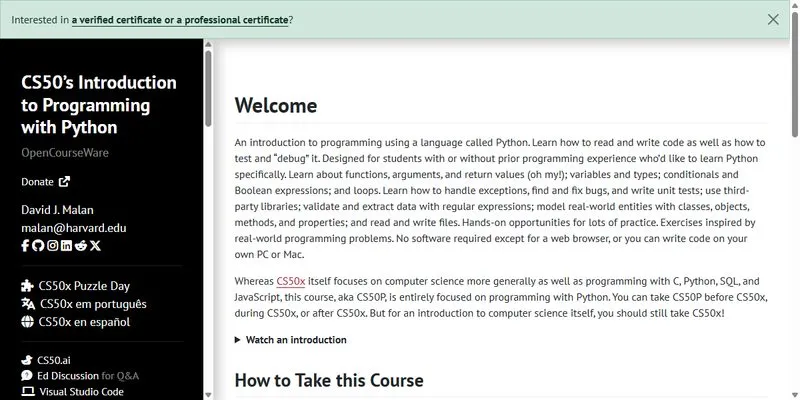 CS50's Introduction to Programming with Python (CS50P)Harvard UniversityGo deeper: ten weeks that make you a real programmer.Course · Beginner · Free; optional paid certificate on edX
Build this: Take a messy export, such as a bank statement or a sports table, and write a script that cleans it and prints a summary.
Already code in another language? Do the Kaggle course in an afternoon and move on.
- 2
The maths you actually need
6–8 weeks, alongside PythonYou don't need a maths degree. Three areas matter: linear algebra (how data is stored and transformed), a little calculus (how models learn) and statistics (how you tell if they work).
You'll be able to
- Picture vectors and matrices, and what multiplying them does
- Explain how gradient descent nudges a model towards fewer mistakes
- Read averages, spread, probability and confidence intervals without guessing
Our picks
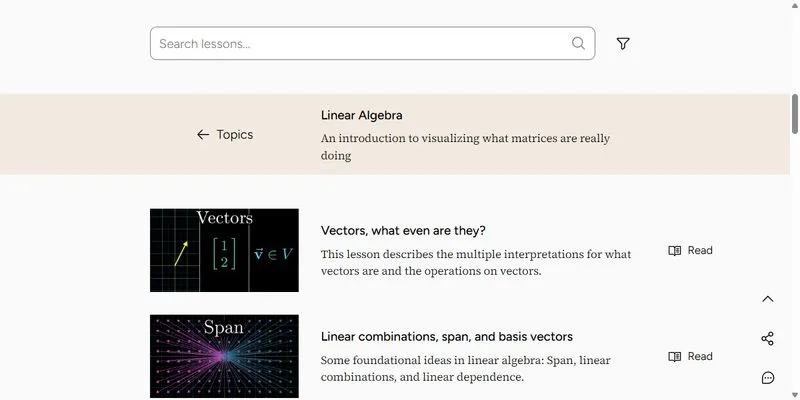 Essence of Linear Algebra3Blue1Brown (Grant Sanderson)See the ideas first, as animations.Course · Beginner · Free
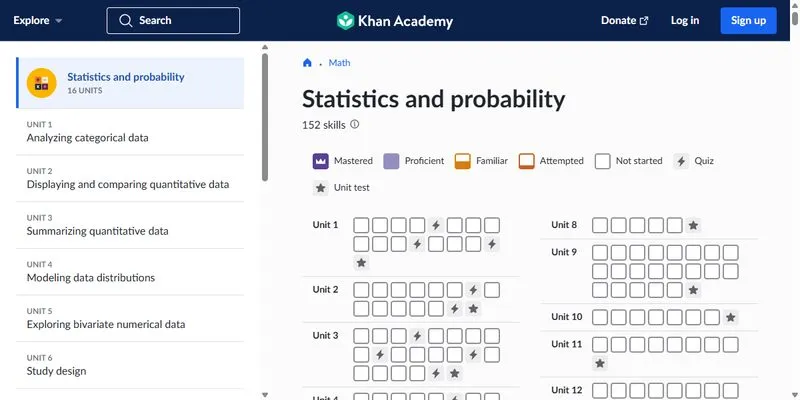 Statistics and probabilityKhan AcademyPractise the statistics, with instant feedback.Course · Beginner · Free; an account saves your progress
- Mathematics for Machine LearningMarc Peter Deisenroth, A. Aldo Faisal and Cheng Soon OngThe reference book when you want the full picture.Book · Intermediate · Free PDF; print edition from Cambridge University Press
Build this: Work out two steps of gradient descent by hand for a line through five points, then check your answer in Python.
Building apps on existing models? A light pass is enough. Come back when something stops making sense.
- 3
Classical machine learning
2–3 monthsMost AI in business still predicts numbers and categories from tables: fraud, prices, customers about to leave. This is where you learn the whole workflow, and how to test a model honestly.
You'll be able to
- Train a model with scikit-learn and test it on data it has never seen
- Choose between linear models, decision trees and gradient boosting
- Judge a model with precision and recall, and spot overfitting
Our picks
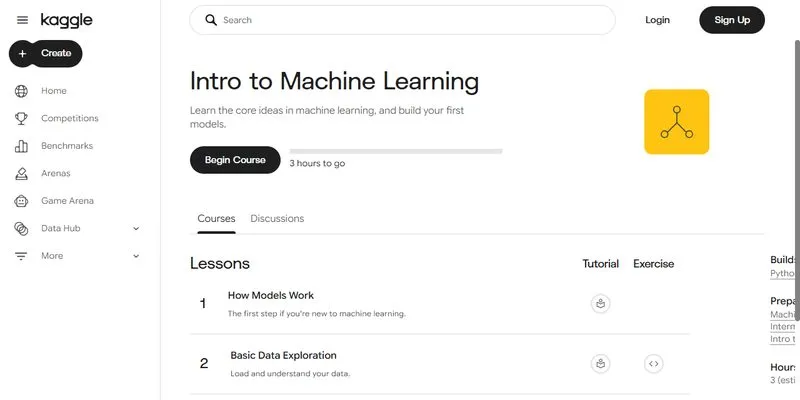 Intro to Machine LearningKaggleYour first model in about three hours.Course · Beginner · Free, with a Kaggle account
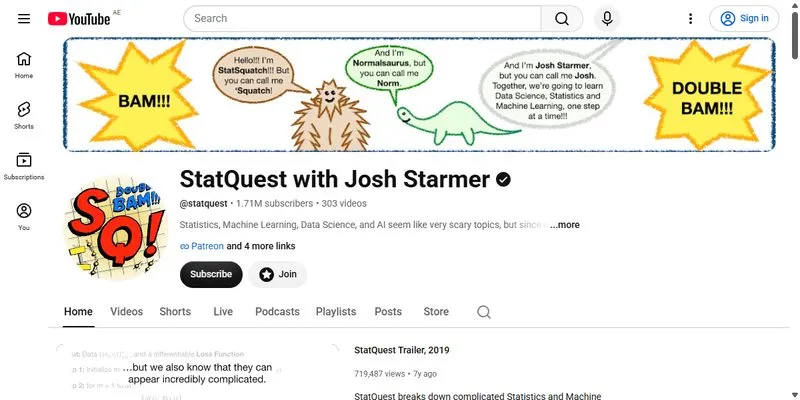 StatQuestJosh StarmerShort videos that make each algorithm click: trees, forests, boosting.Course · Beginner · Free on YouTube; optional paid books
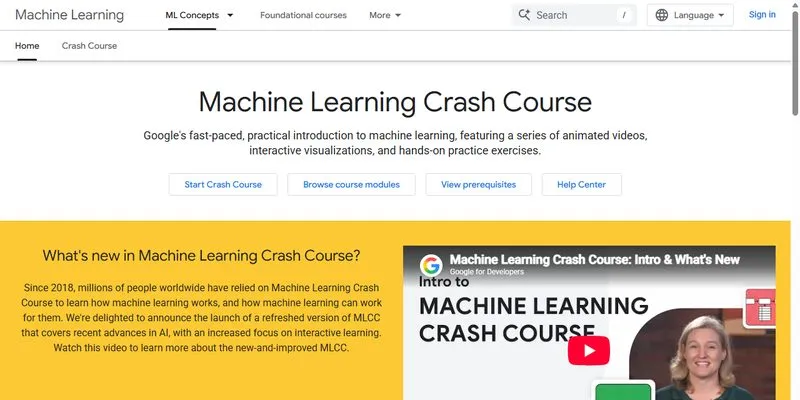 Machine Learning Crash CourseGoogleGoogle's fuller course, with interactive exercises.Course · Intermediate · Free
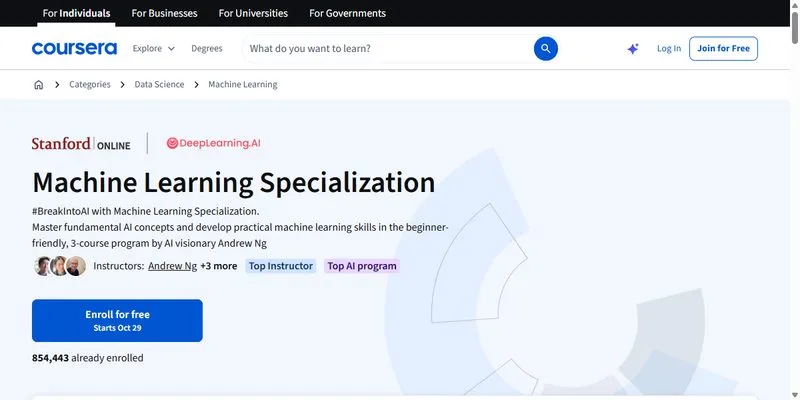 Machine Learning SpecializationAndrew Ng (DeepLearning.AI and Stanford Online)The best-known ML course, if you want a guided, paid programme.Course · Beginner · Coursera subscription; financial aid available
- Hands-On Machine Learning with Scikit-Learn, Keras and TensorFlowAurélien GéronThe practical book most people learn from.Book · Intermediate · Paid book; code notebooks are free
- An Introduction to Statistical LearningGareth James, Daniela Witten, Trevor Hastie, Robert Tibshirani and Jonathan TaylorThe free textbook for the statistics underneath.Book · Intermediate · Free online; print edition available
Build this: Predict house prices or which customers will leave, using a public dataset. Write one page on how good the model really is and where it fails.Datasets to try: House prices, Customers who leave (telecom), Card fraud, Spam text messages
- 4
Deep learning
2–3 monthsNeural networks power image recognition, speech and language models. You will train them yourself, and see why GPUs matter.
You'll be able to
- Build and train neural networks in PyTorch
- Fine-tune a pretrained image or text model on your own data
- Explain how a transformer processes text
Our picks
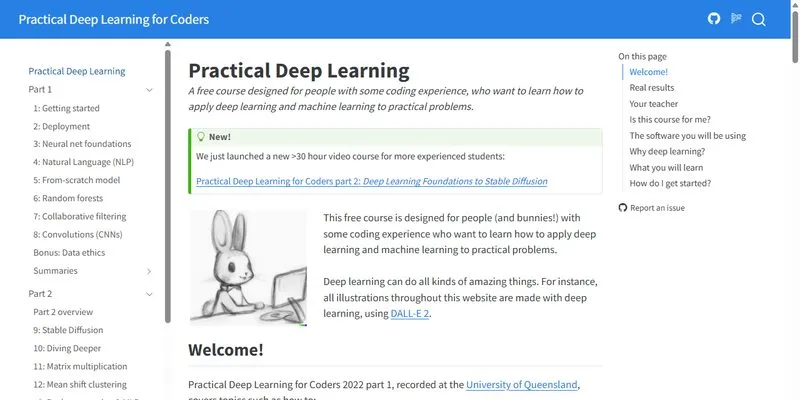 Practical Deep Learning for Codersfast.aiBuild working models from lesson one.Course · Intermediate · Free
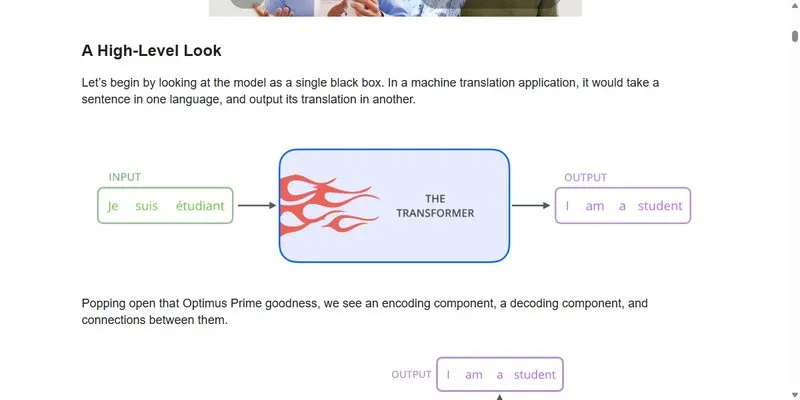 The Illustrated TransformerJay AlammarThe classic diagrams that explain attention and transformers.Article · Intermediate · Free
- Understanding Deep LearningSimon J. D. PrinceThe free book that explains how it all works.Book · Advanced · Free PDF; print edition available
Build this: Fine-tune an image model to tell apart something you care about, such as your plants or local birds, and put it online as a small demo. A free Hugging Face account can host up to two Gradio demos.
No powerful computer needed: Google Colab and Kaggle notebooks give you free GPU time, within usage limits.
- 5
Building with large language models
1–2 monthsThis is where most new AI work is: building products on top of existing models, not training them from scratch.
You'll be able to
- Call a model API and get structured, reliable output
- Add your own documents with RAG, and actions with tool use
- Measure quality with a set of test questions before you ship
- Fine-tune a small open model with LoRA when prompting is not enough
Our picks
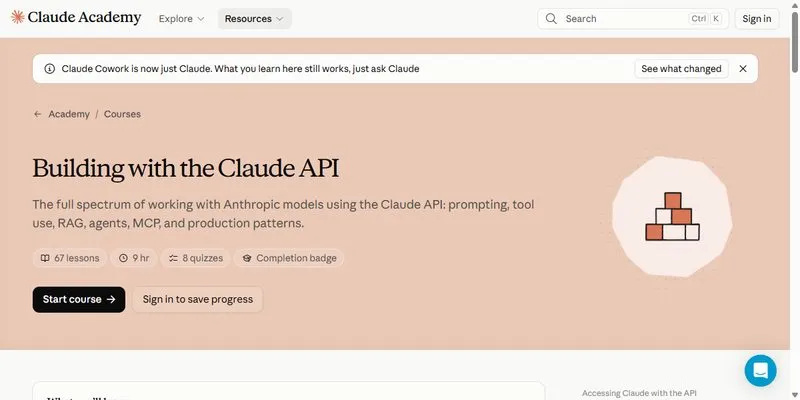 Building with the Claude APIAnthropicAPI basics, RAG, tool use, evals and agents in one course.Course · Intermediate · Free course; API use is paid
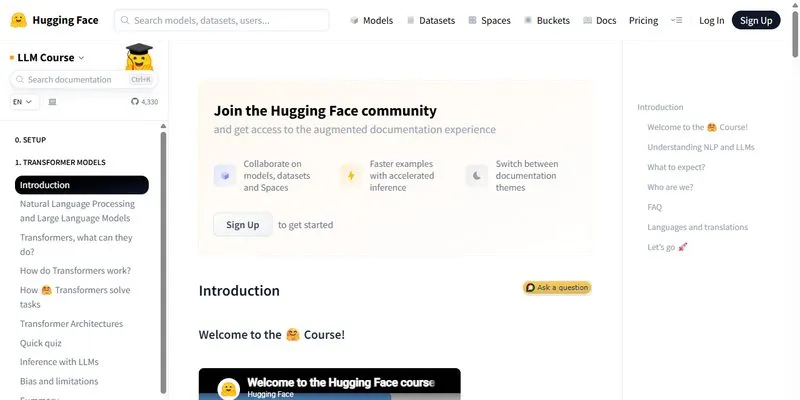 LLM CourseHugging FaceOpen models, fine-tuning and the Hugging Face tools.Course · Advanced · Free
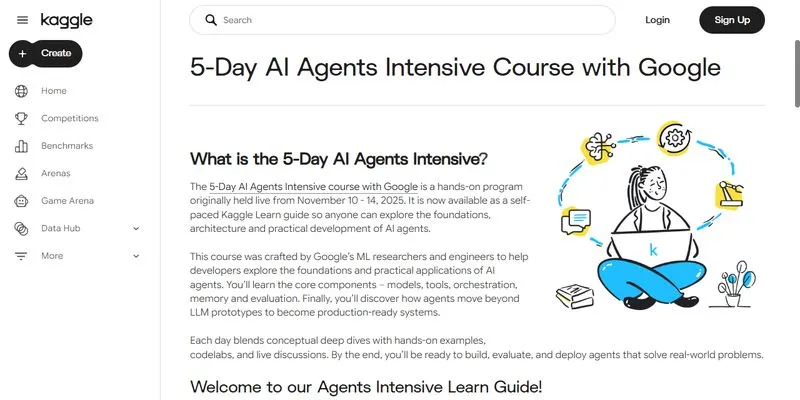 5-Day AI Agents IntensiveGoogle and KaggleA short, hands-on course on agents.Course · Intermediate · Free
- Build a Large Language Model (From Scratch)Sebastian RaschkaBuild a small language model from scratch to see inside.Book · Advanced · Paid book; code is free on GitHub
Build this: A chatbot that answers questions from your own documents and shows its sources, plus 20 test questions you rerun after every change.
- 6
Shipping to production
1–2 monthsA model on your laptop helps nobody. Production means it runs reliably, costs what you expect, and you notice when it gets worse.
You'll be able to
- Package and deploy a model or AI app behind an API
- Test code, data and model, and automate releases
- Watch quality, cost and drift after launch
Our picks
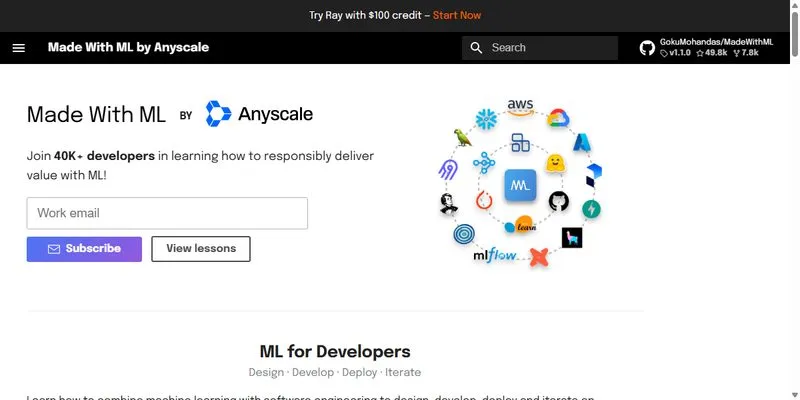 Made With MLGoku Mohandas (Anyscale)The full path from notebook to production, with code.Course · Advanced · Free lessons online; optional paid live cohort
- AI EngineeringChip HuyenChip Huyen's book on building real products on large models.Book · Intermediate · Paid book
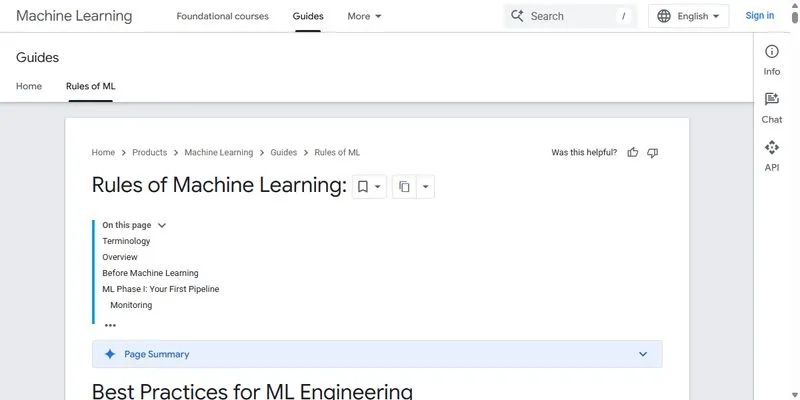 Rules of Machine Learning: Best Practices for ML EngineeringMartin Zinkevich (Google)Google's 43 practical rules for shipping machine learning.Article · Intermediate · Free
- Interpretable Machine LearningChristoph MolnarHow to explain what a model decided, for users and regulators.Book · Intermediate · Free online
Build this: Put your chatbot from stage 5 online, with logging, a spending limit and tests that run automatically on every change.
Which route fits you?
Three common AI jobs, and the stages each one leans on. Everyone needs Python.
| Role | 1 Python | 2 Maths | 3 Classical ML | 4 Deep learning | 5 LLM apps | 6 Production |
|---|---|---|---|---|---|---|
| AI engineerBuilds products on existing models: chatbots, agents, AI search. | Core | Light | Light | Optional | Core | Core |
| Machine learning engineerTrains, deploys and maintains models. | Core | Core | Core | Core | Light | Core |
| Data scientistFinds answers in data and builds models that predict. | Core | Core | Core | Light | Optional | Optional |
Build a portfolio
- Finish two or three projects properly, rather than starting ten.
- Use real, messy data, not only tutorial datasets.
- Write up each project: the problem, what you tried, how you measured it and what failed.
- Put the code on GitHub and, where you can, a live demo anyone can try, for example on Hugging Face Spaces.
Common traps
- Endless tutorials. Watching course after course without building. Do the stage project before you start the next course.
- Skipping evaluation. A demo that works once is not a product. Always test on data the model has not seen.
- Chasing every new tool. Frameworks change every few months. Python, statistics and evaluation don't.
- Waiting until you feel ready. Start a project when you know about half of what it needs. The rest comes from getting stuck.
How we put this roadmap together
The six stages follow the order most AI engineering and machine learning curricula use: programming and maths first, then classical machine learning, deep learning, building on large language models and running models in production. Most of our picks are free or have free versions; where one is paid, its card says so. We checked each one on its official page. The times are our own estimates for someone studying 8–10 hours a week; people with a coding or maths background will move faster. We review this page every quarter. Spotted something to fix? Tell us.
Learn AI path · Level 4 · Frontier view · step 16 of 16
You've reached the end of the path. Well done!
See all of level 4