
How much energy does one AI question use?
Headlines say AI is draining the world's power and water. Others say one question is nothing. Both are partly right. Here's how much energy one AI question really uses, compared with everyday things, why images and videos use far more, and what the totals look like worldwide.
One typical AI text question uses about
0.3 watt-hours
That's roughly a 10-watt LED bulb for 2 minutes, or a microwave for about 1 second. Tiny on its own; huge when billions of people ask every day.
- 0.24 WhA typical (median) Gemini text question, including data centre overhead. Google also says it uses about 0.26 ml of water, roughly five drops.Google, August 2025 (company figure)
- 0.34 WhAn average ChatGPT question, according to OpenAI's CEO Sam Altman. He gave no method or model.OpenAI, June 2025 (company figure)
- 0.3 WhIndependent estimate for a typical GPT-4o question, about a tenth of the 3 Wh figure that was widely quoted in 2023.Epoch AI, February 2025
What does one AI question compare to?
Pick something everyday. Each dot is one AI text question (0.3 Wh).
Boil a litre of water uses about 333AI questions' worth of energy
Heating 1 litre from 20°C to 100°C takes about 93 Wh; a kettle loses a little heat, so about 100 Wh.
Our calculation
- Boil a litre of water: about 333 AI questions (100 Wh). Our calculation.
- Stream an hour of video: about 267 AI questions (80 Wh). iea.org
- Run a microwave for a minute: about 57 AI questions (17 Wh). Our calculation.
- Light an LED bulb for an hour: about 33 AI questions (10 Wh). Our calculation.
- Do one Google search (2009): about 1 AI questions (0.3 Wh). fullfact.org
How much does your AI use add up to?
In a year that's about 2.2 kWh: the same as boiling 22 litres of water, or streaming 27 hours of video.
Based on 0.3 Wh per text question. Images, videos and long reasoning chats use more.
It depends what you ask
Energy for one task, on a scale where each step is 10 times bigger.
- A short answer from a small AI model0.03 WhLlama 3.1 8B, including cooling and other overhead (114 joules). technologyreview.com
- A typical chatbot question0.3 WhBetween Google's 0.24 Wh and OpenAI's 0.34 Wh. epoch.ai
- One AI image0.63 WhStable Diffusion 3 Medium, 1024 × 1024, standard quality, including overhead (about 2,282 joules). technologyreview.com
- An answer from a very large AI model1.9 Wh · about 6 questionsLlama 3.1 405B, including overhead (about 6,706 joules). Reasoning models that "think" longer can use more. technologyreview.com
- A 5-second AI video944 Wh · about 3,147 questionsCogVideoX, about 3.4 million joules: like running a microwave for over an hour. technologyreview.com
Where the energy goes
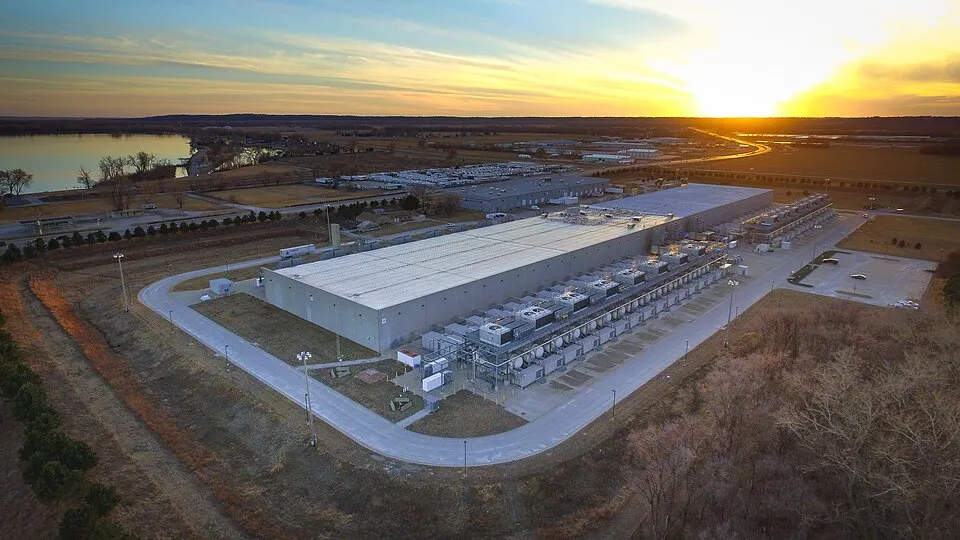
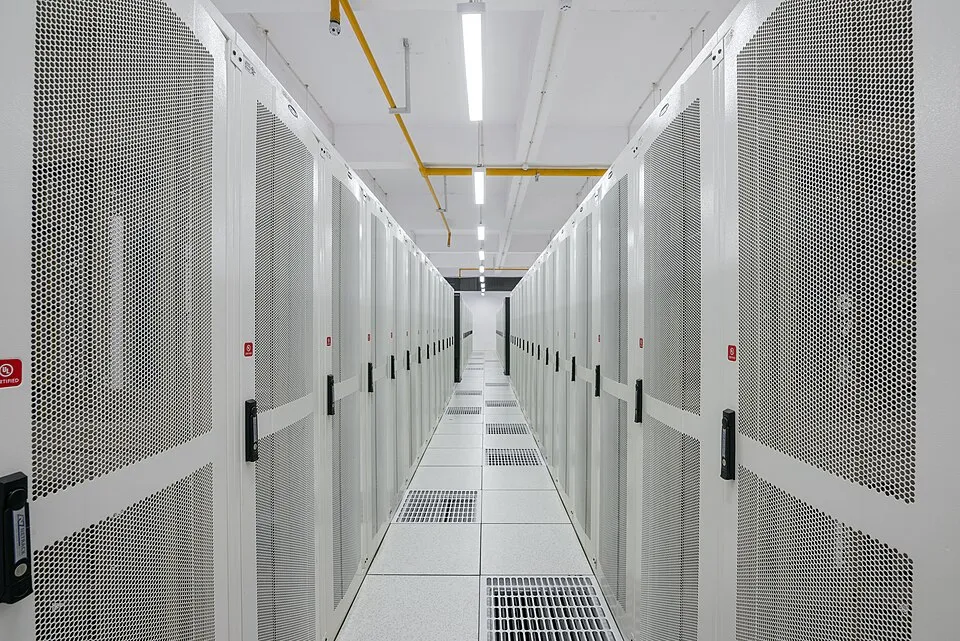
When you press enter, your question travels to a data centre like this one. There, AI chips run the model to write the answer, word by word. Cooling, power supplies and spare machines kept ready add more on top; Google's 0.24 Wh figure includes all of that.
Longer answers, uploaded files and "reasoning" models that think step by step make the chips work longer, so they use more energy. Pictures and especially videos need far more work than text. For the hardware behind it, see What powers AI.
Myths and facts
One ChatGPT question uses 10 times the energy of a Google search.
That came from a 2023 estimate of about 3 Wh. Newer estimates put a typical question at about 0.3 Wh, close to Google's old figure for a search, thanks to more efficient models and chips.
Source: epoch.aiEvery AI question drinks a bottle of water.
Google says a typical Gemini text question uses about 0.26 ml of water for cooling, roughly five drops. Water use varies a lot by data centre and climate.
Source: arxiv.orgAll AI uses about the same energy.
A 5-second AI video can use thousands of times more energy than a text question, and big models use far more than small ones.
Source: technologyreview.com
Small per question, big in total
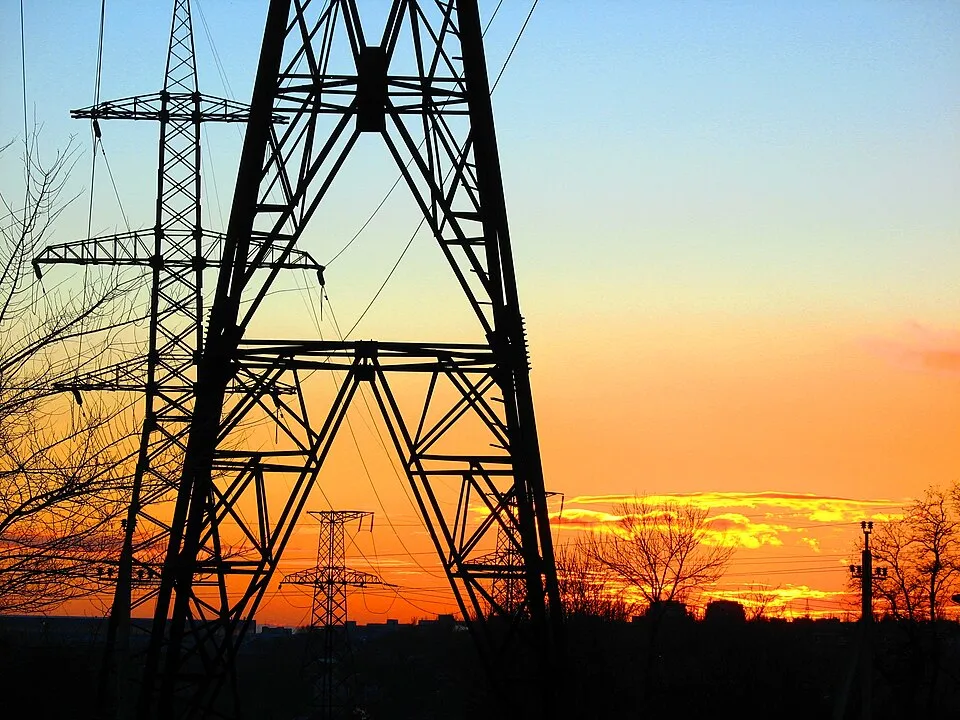
- 415 TWhElectricity used by the world's data centres in 2024, about 1.5% of all electricity. The US used 45% of it, China 25%, Europe 15%.iea.org
- 945 TWhExpected by 2030, more than double and nearly 3% of the world's electricity, with AI the biggest reason.iea.org
- 33×How much Google says it cut the energy of a typical Gemini question in one year, through better software and hardware (company figure).arxiv.org
What to do (and what to keep in mind)
Simple habits
- Don't worry about everyday text questions: a few dozen a day use less than boiling one kettle.
- Use the smaller, faster model for simple questions when your app lets you choose.
- Think twice before generating lots of AI videos or images just for fun: that is where the energy adds up.
- Ask clearly the first time, so you need fewer retries.
Keep in mind
- Company figures (Google, OpenAI) have not been independently checked, and OpenAI has not explained how it got its number.
- A "question" varies: long chats, uploaded files and reasoning models use more than a short question.
- These figures cover answering questions, not the huge one-off energy cost of training each model.
- The climate impact also depends on how the electricity is made where the data centre is.
How we chose the evidence
We used figures published by Google and OpenAI (labelled as company figures, since they are not independently checked), independent estimates from Epoch AI, measurements of open AI models by MIT Technology Review, and the International Energy Agency for the global picture. Everyday comparisons are either sourced or simple physics, marked “our calculation”. These numbers change quickly as chips and models get more efficient, so we review this page every quarter. For the hardware behind AI, see What powers AI.