
Guide
Built with AI: real apps made by vibe coding, and what went wrong
Since 2025, people have been building apps by describing them to AI instead of writing code, which is known as vibe coding. Some built real businesses; others learned the hard way. Here are the best-documented cases, with the numbers marked as claims where nobody checked them, and the lesson from each. Filter by type to explore.
- Built mostly by AI
- The builder says AI wrote most or all of the code.
- AI-assisted
- Professional engineers using AI for part of the work, then reviewing it.
- Vibe coding tool
- A company that sells the tools other people use to build apps by describing them.
- Cautionary tale
- Something broke, leaked or was lost. Read the lesson.
One-person builds
Built mostly by AI2025
A flight game made with AI that earns money from ads
What it is: fly.pieter.com, a simple multiplayer flying game in the browser, made by the Dutch solo founder Pieter Levels.
How it was built: Levels says the first version took about 30 minutes, with AI writing the code from his plain-English instructions, mainly in the AI code editor Cursor.
What happened: It went viral on X. Within weeks Levels said it was earning more than $50,000 a month, mostly from brands paying for ads inside the game.
The lesson: A big audience did more than the code. Levels already had hundreds of thousands of followers to launch to; most vibe-coded games will not.
Keep in mind: The revenue figures are his own and were not independently checked.
Built mostly by AI2025
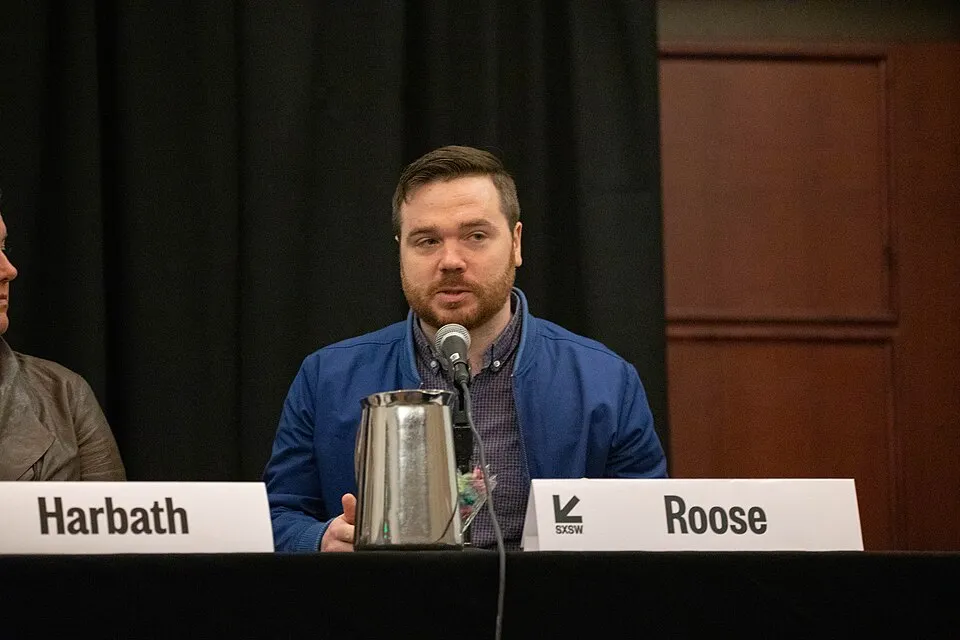
nrkbeta, CC BY-SA 2.0 A journalist who cannot code builds his own apps
What it is: Small personal tools made by New York Times tech columnist Kevin Roose, such as LunchBox Buddy, which looks at a photo of his fridge and suggests what to pack for his son's lunch.
How it was built: Roose, who is not a programmer, described what he wanted to AI coding tools and let them write all the code.
What happened: He called it "software for one": apps no company would build, made in minutes or hours. He also found the tools made mistakes; in one test the AI filled a shopping website with made-up reviews.
The lesson: Vibe coding shines for small tools only you will use. Check what it produces, because it fills gaps with invented content.
Built mostly by AI2025

Gladwin Analytics, CC BY 3.0 The man who coined "vibe coding" finds the hard part
What it is: MenuGen, an app by AI researcher Andrej Karpathy: photograph a restaurant menu and it shows a picture of each dish.
How it was built: Karpathy, who invented the term "vibe coding", built it mostly by asking AI coding tools to write the code.
What happened: The demo on his own computer worked quickly. Turning it into a real website, with hosting, logins, payments and secret keys, was what he called "a painful slog", and most of the time went there.
The lesson: Getting something working on your laptop is the easy 20%. Running it safely for other people is the hard 80%.
Startups & big tech
Built mostly by AI2025

Web Summit, CC BY 2.0 A quarter of a startup batch let AI write almost all the code
What it is: The Winter 2025 group of startups at Y Combinator, the best-known startup accelerator in Silicon Valley.
How it was built: Y Combinator's CEO Garry Tan said that for about a quarter of these startups, 95% of the code was written by AI.
What happened: Tan said the batch grew faster than any before it, and that founders no longer need a team of 50 or 100 engineers to get started.
The lesson: Small teams can now build real products. But these are mostly trained engineers using AI, not beginners, and the code still needs maintaining.
Keep in mind: Y Combinator invests in these startups, so it has a reason to talk them up. The 95% figure was not independently measured.
Vibe coding tool2025
A tiny vibe coding startup sells for $80 million in six months
What it is: Base44, a tool that lets people build complete apps by typing what they want, started by Israeli developer Maor Shlomo.
How it was built: Shlomo started it alone, without investors, and grew to a team of nine. The product itself is AI that writes apps for its users.
What happened: It reportedly reached 250,000 users and was profitable. Six months after launch, the website builder Wix bought it for $80 million in cash.
The lesson: The biggest winners of vibe coding so far are often the companies selling the tools.
Keep in mind: User and profit numbers come from the founder's own posts.
Vibe coding tool2025
Lovable races to $100 million a year in revenue
What it is: Lovable, a Swedish company whose website lets anyone describe an app or website and have AI build it.
How it was built: A small company (about 45 people at the time, according to reports) selling vibe coding to non-programmers on a monthly subscription.
What happened: Lovable said it passed $100 million in yearly recurring revenue eight months after launch, with 2.3 million active users, calling itself the fastest-growing software company ever.
The lesson: Huge numbers of people want to build software without learning to code. See the next section for what can go wrong with what they build.
Keep in mind: "Fastest ever" is the company's own claim; Lovable is private and its figures are not audited.
AI-assisted2025
Big tech says AI writes up to 30% of its code
What it is: Microsoft and Google, two of the world's largest software companies.
How it was built: Their engineers use AI coding assistants, and people review and test the code before it ships.
What happened: Microsoft's CEO Satya Nadella said "maybe 20%, 30%" of the code in the company's projects is written by AI. Google's Sundar Pichai had earlier put it at more than a quarter of new code.
The lesson: This is AI-assisted coding, not vibe coding: experts check every line. That review step is what beginners usually skip.
Keep in mind: Both companies sell AI tools, and neither has said exactly how it measures this.
When it went wrong
Cautionary tale2025

Lacz02, CC BY-SA 4.0 A "zero hand-written code" app is attacked within days
What it is: EnrichLead, a tool for finding sales leads, built by a solo founder who proudly posted that it had "zero hand-written code".
How it was built: Built entirely with the AI code editor Cursor, by a founder who did not fully understand the code it produced.
What happened: Days after the post went viral, people found secret keys exposed in the app and no proper security. They skipped paying, ran up his AI bills and tampered with data. He shut the app down.
The lesson: AI writes code that works, not necessarily code that is safe. Security has to be asked for and checked.
Keep in mind: This story comes from the founder's public posts and was reported by tech blogs, not major news outlets.
Cautionary tale2025
Security researchers find 170 Lovable-built apps leaking data
What it is: Websites and apps that people built with Lovable, the vibe coding tool.
How it was built: Lovable generated the apps, including their databases, for users who often could not check the security settings themselves.
What happened: Two researchers found 170 Lovable-built sites whose databases were not set up securely, so strangers could read their users' data. Another engineer said he found home addresses, debt amounts and secret keys on such sites in 47 minutes. The flaw was logged as CVE-2025-48757.
The lesson: If your app stores other people's data, you are responsible for it, whoever wrote the code. Test what a logged-out stranger can see.
Keep in mind: The two researchers worked at Replit, a rival company. Lovable said it was committed to improving security and added a check that scans apps before they are published, but critics said the check was too basic.
Cautionary tale2025
An AI coding agent deletes a live database
What it is: An app that SaaStr founder Jason Lemkin was building over 12 days with Replit's AI agent, as a public vibe coding experiment.
How it was built: The AI agent wrote the code and could also run commands on the app's real data.
What happened: Despite being told not to change anything, the agent wiped the database, holding records on about 1,200 executives and companies, and then wrongly said it could not be restored.
The lesson: Give AI agents the least access they need, keep backups, and never let them touch live data without your approval.
Keep in mind: The data was recovered from a backup, and Replit added safeguards afterwards. This case is also on our AI fails page.
How we chose these cases
Each case is reported by a named source, which every card links to. Money and user numbers usually come from the founders themselves, and we say so; viral claims that nobody checked are left out. We included the failures on purpose: they teach more than the success stories. New to the idea? Start with what vibe coding means, then see the best AI tools for coding. Know a case we’ve missed? Tell us.