
Guide
10 AI people worth following
You don't need to follow hundreds of accounts to keep up with AI. These ten people explain what is actually happening, each from a different angle, from Nobel-winning research to practical tips for using AI at work. We checked every link against each person's own website or public profile.
Pioneers and lab leaders
The people whose research created modern AI, and who now lead some of the labs pushing it forward.
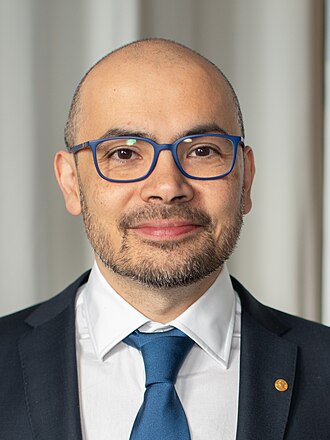
1. Demis Hassabis
Co-founder and chairman of Google DeepMind, chief scientist of Alphabet, CEO of Isomorphic Labs
Hassabis co-founded DeepMind, whose AlphaGo beat a world champion at Go and whose AlphaFold predicts the 3D structure of proteins. He shared the 2024 Nobel Prize in Chemistry for that work. He also runs Isomorphic Labs, which uses AI to discover new medicines.
Known for: DeepMind · AlphaGo · AlphaFold · Nobel Prize in Chemistry 2024
Follow for: Big-picture views on the path to general AI and on AI for science, plus major Google DeepMind announcements.
Photo (2024): John Sears, CC BY-SA 4.0, via Wikimedia Commons, cropped
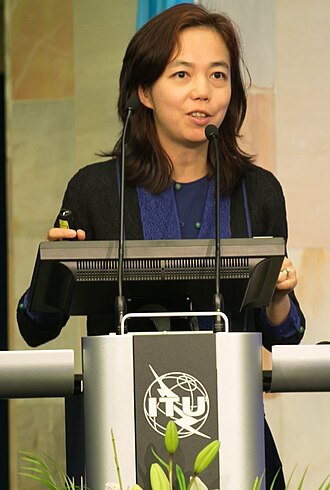
2. Fei-Fei Li
Co-founder and CEO of World Labs, professor at Stanford
Li created ImageNet, the image dataset that helped start the deep learning boom, and co-founded Stanford's Human-Centered AI Institute (HAI). She directed the Stanford AI Lab, was chief scientist of AI/ML at Google Cloud, and now leads World Labs, which builds AI that understands 3D space ("spatial intelligence").
Known for: ImageNet · Stanford's Human-Centered AI Institute · World Labs and spatial intelligence
Follow for: Where AI is heading beyond text, into the physical world, and the case for AI that puts people first.
Photo (2017): ITU Pictures, CC BY 2.0, via Wikimedia Commons, cropped
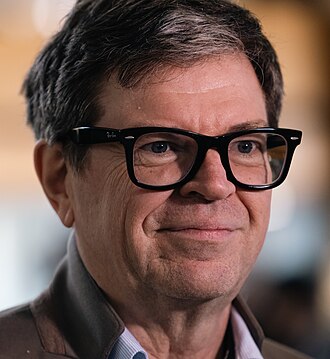
3. Yann LeCun
Executive chairman of AMI Labs, professor at New York University
LeCun pioneered convolutional neural networks, the technology behind modern image recognition, and is a winner of the ACM Turing Award, computing's highest honour. He was Meta's chief AI scientist until 2025 and now leads Advanced Machine Intelligence (AMI Labs).
Known for: Convolutional neural networks · Turing Award for deep learning · Founding Meta's AI research lab
Follow for: Outspoken, often contrarian views, especially his argument that today's language models alone won't reach human-level intelligence.
He says on his website that he no longer posts on X. Follow him on Threads or LinkedIn instead.
Photo (2025): Ecole polytechnique from Paris, CC BY-SA 2.0, via Wikimedia Commons, cropped
Teachers
The best place to start if you want to understand how AI works, whatever your background.
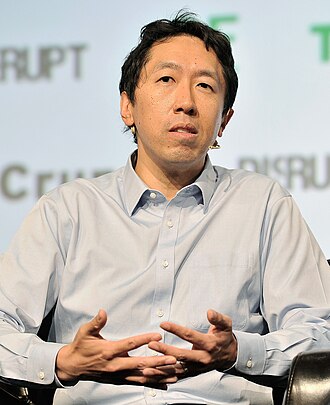
4. Andrew Ng
Founder of DeepLearning.AI, co-founder of Coursera, adjunct professor at Stanford
Ng founded the Google Brain team, was chief scientist at Baidu and directed the Stanford AI Lab. Through Coursera and DeepLearning.AI, more than 8 million people have taken one of his AI classes, making him probably the best-known AI teacher in the world.
Known for: Founding Google Brain · Coursera's Machine Learning course · DeepLearning.AI and its weekly newsletter The Batch
Follow for: Practical, optimistic takes on what AI means for businesses and careers, and where to start learning.
Photo (2017): TechCrunch, CC BY 2.0, via Wikimedia Commons, cropped
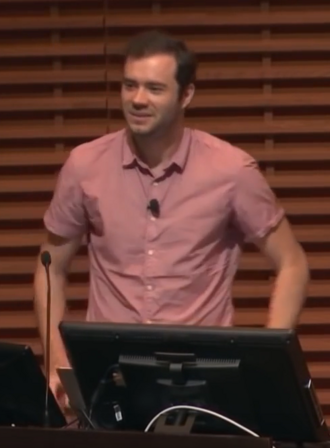
5. Andrej Karpathy
AI researcher and educator at OpenAI
Karpathy was a founding member of OpenAI and later Director of AI at Tesla, where he led the computer vision team behind Autopilot. He designed Stanford's first deep learning course (CS231n) and makes some of the most popular AI explainer videos on YouTube, for both technical and general audiences. His website says he has since returned to OpenAI.
Known for: Stanford's CS231n course · Tesla Autopilot's vision team · YouTube explainers on how language models work · Coining "vibe coding"
Follow for: Clear explanations of how AI models actually work, and early, thoughtful takes on new tools and ideas.
Photo (2019): Gladwin Analytics, CC BY 3.0, via Wikimedia Commons, cropped
6. Jeremy Howard
Co-founder of fast.ai and Answer.AI
Howard co-founded fast.ai, whose free Practical Deep Learning course has helped many people get into AI without a PhD. He was president and chief scientist of Kaggle, and co-created ULMFiT, an early demonstration of the "pre-train, then fine-tune" approach behind today's language models.
Known for: fast.ai's free deep learning courses · ULMFiT · Kaggle · Answer.AI
Follow for: Hands-on, opinionated takes on coding with AI, open source and teaching deep learning.
Builders
Hands-on developers who test new models and tools as soon as they appear and write up what they find.
7. Simon Willison
Independent open-source developer, co-creator of Django
Willison co-created the Django web framework and builds Datasette, an open-source tool for exploring data. His blog is one of the most detailed day-by-day records of what new AI models can and can't do, and he coined the term "prompt injection" for a major AI security risk.
Known for: Co-creating Django · Datasette · Coining "prompt injection"
Follow for: Careful, hands-on notes on new models and AI tools, and plain-English warnings about AI security.
8. Chip Huyen
Writer and computer scientist, author of AI Engineering
Huyen has worked on machine learning tools at NVIDIA, Snorkel AI and Netflix, and founded and sold an AI infrastructure company. She taught ML systems at Stanford, and her books Designing Machine Learning Systems and AI Engineering are standard reading for people putting AI into real products. AI Engineering was the most-read book on O'Reilly's platform in 2025.
Known for: The book AI Engineering · The book Designing Machine Learning Systems · Teaching ML systems at Stanford
Follow for: Practical lessons on building, evaluating and running AI applications in production.
AI at work
Practical, research-backed advice on using AI in your job and your business.
9. Ethan Mollick
Professor at the Wharton School, author of Co-Intelligence
Mollick studies how AI changes work and education. His newsletter One Useful Thing and his bestseller Co-Intelligence are among the most practical guides to using AI at work. His next book, Co-Existence, comes out on 20 October 2026.
Known for: The One Useful Thing newsletter · The book Co-Intelligence · Research on AI and productivity
Follow for: Research-backed, practical advice on using AI at work and in teaching, often with experiments you can try yourself.
10. Allie K. Miller
AI business leader, advisor and investor
Miller trains and advises Fortune 500 companies, financial institutions and AI labs on putting AI to work. Time named her one of the 100 most influential people in AI.
Known for: Advising large companies on AI adoption · Time100 AI · AI education for business professionals
Follow for: How businesses and non-technical professionals can actually use AI, with practical tips.
How we chose
We picked people who regularly explain AI clearly, cover different parts of the field, and have a track record beyond social media. This is not a ranking: within each group, the order doesn’t matter.
Each profile sticks to public facts that you can check on the linked pages. Handles change and people move between platforms, so we re-check every link regularly. The date on each card shows when its links were last checked.
Spotted an out-of-date link, or think someone is missing? Email us via the About page.