
AI and robots: from factory arms to humanoids
Robots have been around for over 60 years, but for most of that time they had no AI at all: they simply repeated the movements they were programmed with. Now robots are getting AI "brains" that let them see, understand instructions and learn new tasks. Here's how we got here, where robots work today, industry by industry, and what's real versus hype.
Did robots always use AI?
Mostly, no.
- For 60 years most robots were programmed machines: they repeat exact movements and can't see or learn. Most factory robots still work this way.
- AI robots started in labs with Shakey in the 1960s, but stayed slow and experimental for decades.
- What's new is robots with AI "brains" built like ChatGPT, which can see, follow plain-English instructions and handle things they've never met before.
From programmed arms to AI brains
1920No AI: programmed
The word "robot" is bornCzech writer Karel Čapek's play R.U.R. calls its artificial workers "robots", from robota, Czech for forced labour. His brother Josef suggested the word.Source: sciencefocus.com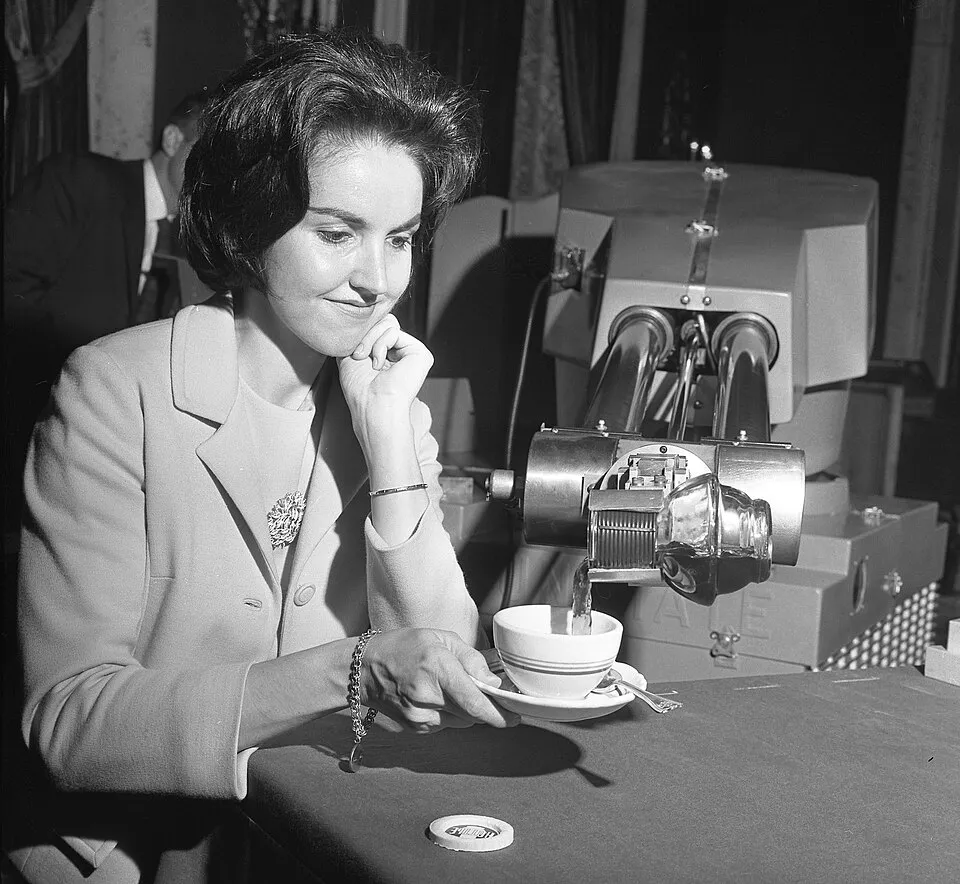
Frank Q. Brown, Los Angeles Times, CC BY 4.0 1961No AI: programmed
Unimate, the first factory robotA robot arm starts work at a General Motors plant in New Jersey, lifting hot metal parts from a casting machine. It repeats recorded movements: no seeing, no learning.Source: guinnessworldrecords.com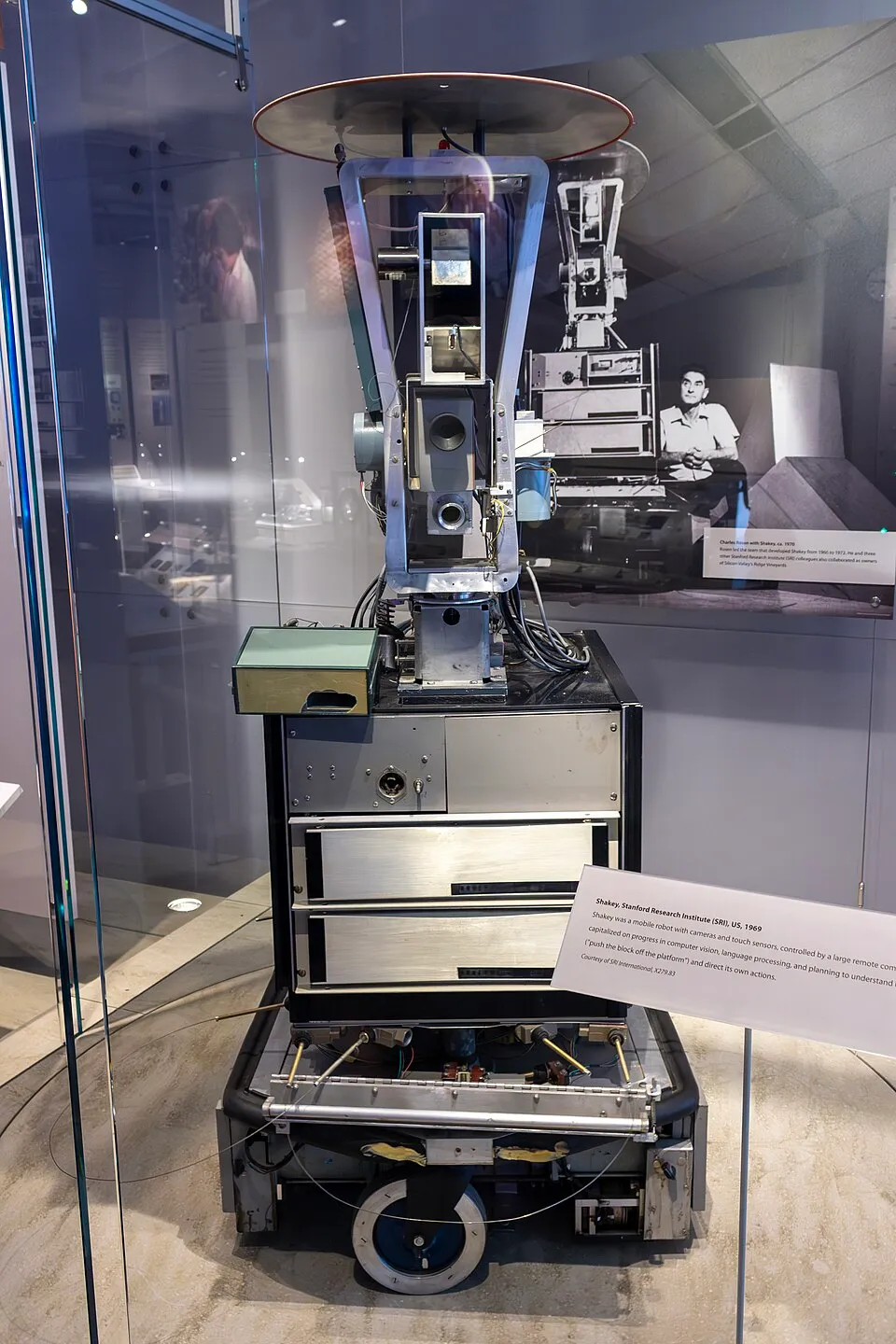
The wub, CC BY-SA 4.0 1966–72Early AI
Shakey, the first robot that could reasonBuilt at SRI in California, Shakey could look at a room, make a plan, recover from mistakes and take commands in simple English. It was slow, but it was the first robot to use AI to decide what to do.Source: spectrum.ieee.org2002Early AI
Roomba brings robots into homesThe robot vacuum used simple sensors and rules to bump its way around a room. Newer robot vacuums use cameras and AI to avoid obstacles such as cables.Source: retaildive.com2011Early AI
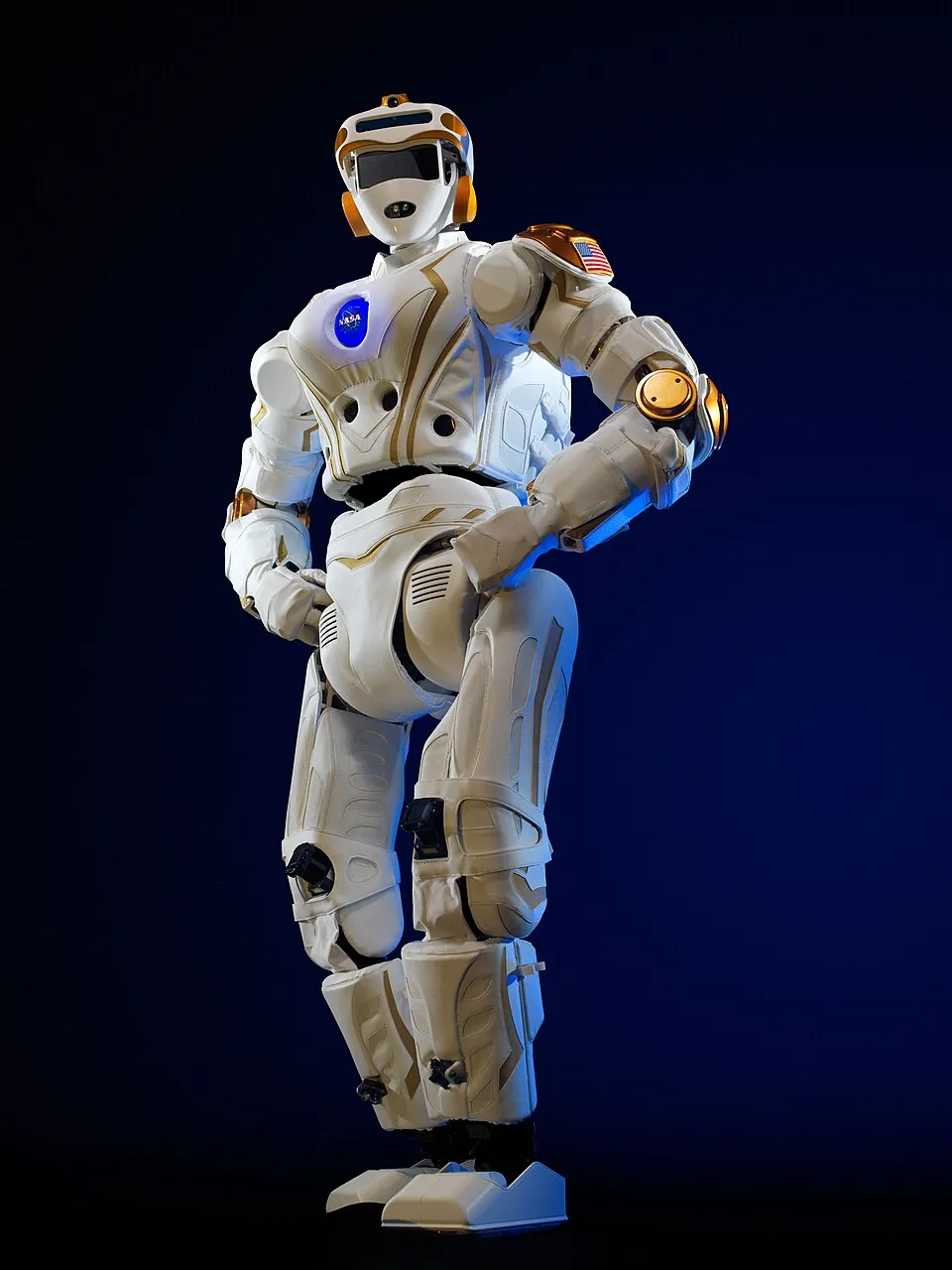
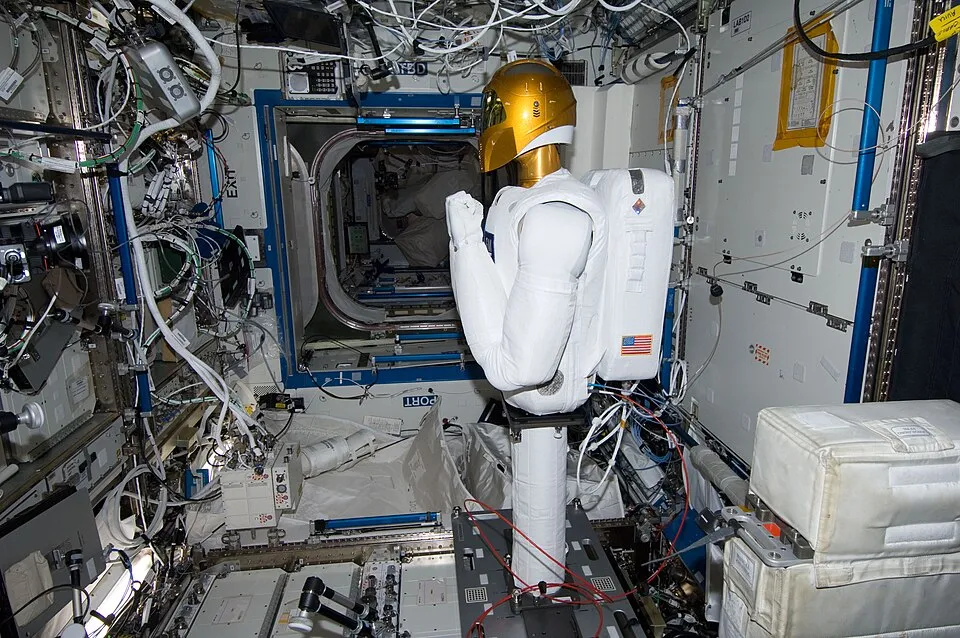
The first humanoid in spaceNASA's Robonaut 2, built with General Motors, joins the crew of the International Space Station to test how a human-shaped robot can help astronauts.Source: universetoday.com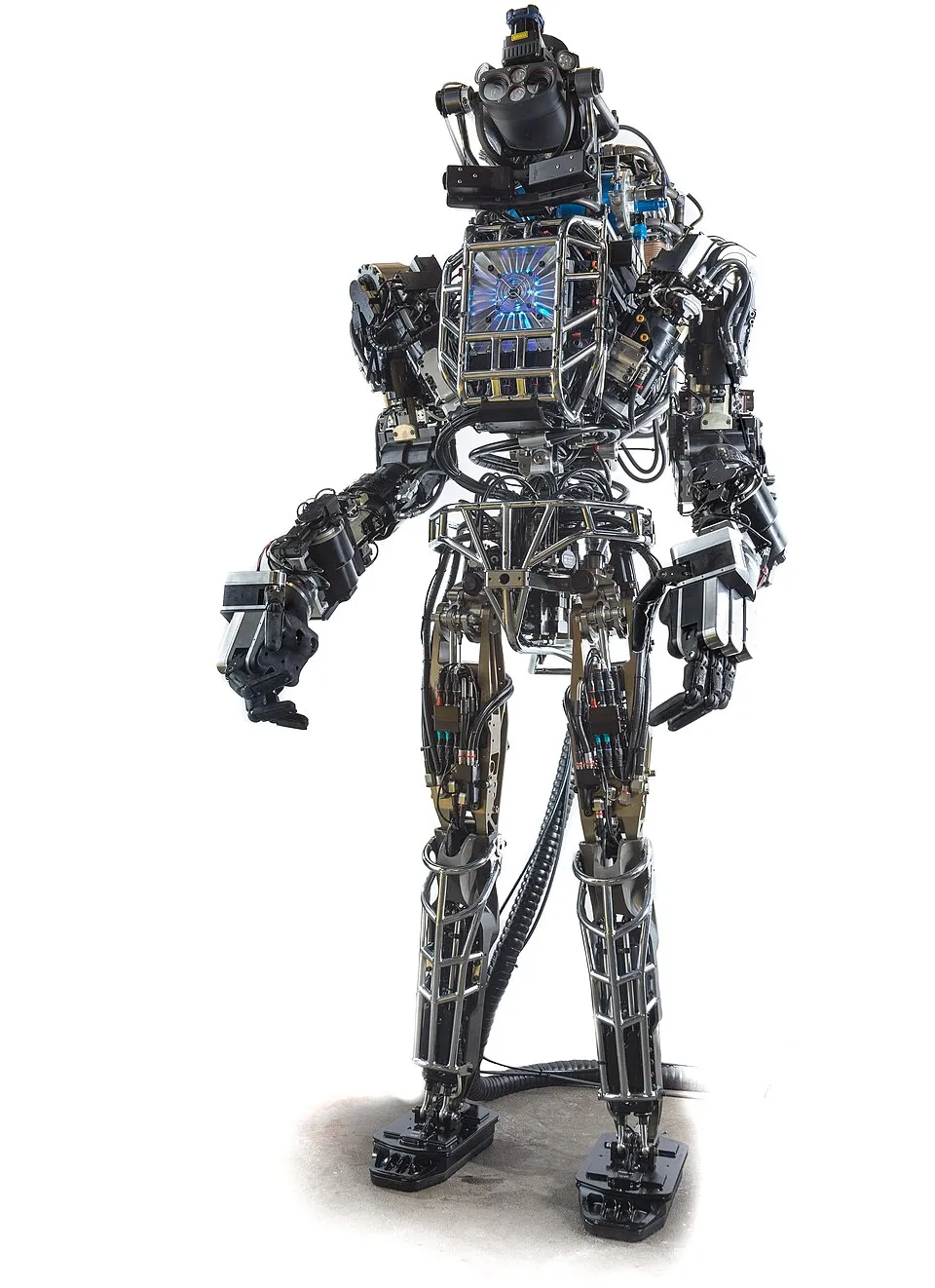
DARPA, Public domain 2013Early AI
Atlas stands upBoston Dynamics unveils the Atlas humanoid for a US government (DARPA) contest to build robots that could help after disasters.Source: en.wikipedia.org2024–25AI-powered
Robots get AI "brains"New AI models let one robot learn many tasks: Physical Intelligence's π0 unloads a dryer and folds laundry, and Google DeepMind's Gemini Robotics 1.5 can pack a suitcase after checking the weather forecast.Source: therobotreport.com2026AI-powered
Humanoids clock inA production version of Atlas starts training at Hyundai's car plant in Georgia, USA, while Waymo's driverless taxis give about 500,000 paid rides a week.Source: just-auto.com
Programmed robot vs AI robot
| Programmed robot | AI robot | |
|---|---|---|
| How it knows what to do | Engineers write or record every movement | Learns from examples, videos and practice |
| Seeing | Little or none: parts must be in exactly the right place | Cameras and AI recognise objects, people and obstacles |
| When something changes | Stops, or makes the same move anyway | Can adjust, within limits |
| Giving it a job | Reprogrammed by an expert | Can follow plain-language instructions |
| Best at | Fast, precise, repetitive work in one spot, like welding or painting | Varied tasks in messy places: warehouses, roads, homes |
| Examples | Unimate and most car-factory arms today | Waymo taxis, Gemini Robotics, the new humanoids |
How a robot "brain" works today
- 1. SeeCameras, depth sensors and touch sensors take in the world, many times a second.
- 2. UnderstandA vision-language model recognises objects and works out what your instruction means.
- 3. PlanIt breaks the job into steps: "find the suitcase, check the weather, pick warm clothes".
- 4. ActAn action model turns each step into motor movements, up to 50 times a second for π0.
These "vision-language-action" models are built like the AI behind chatbots, but trained on robot data: people steering robots by remote control, videos and computer simulations. Collecting enough of that data is the biggest bottleneck. See also AI agents, the software version of the same see-think-act loop.
Robots by industry
Where robots work today, how common they are, and how much AI they really use.
- Common
- Growing fast
- Early days
FactoriesCommon
AI: Mostly programmed arms; AI vision and humanoid trials are spreading.
- 4.66 million industrial robots were at work worldwide at the end of 2024, and 542,000 new ones were installed that year. China has 43% of them. (ifr.org)
- Figure's humanoid robots worked 11 months at BMW's South Carolina plant, helping build more than 30,000 X3 cars (company figures). (interestingengineering.com)
Warehouses and deliveriesCommon
AI: AI plans the routes of huge robot fleets.
- Amazon deployed its 1 millionth robot in 2025, across more than 300 sites, and launched DeepFleet, an AI model it says makes its robots travel 10% more efficiently. (therobotreport.com)
Alvarogarciamd, CC BY-SA 4.0 MedicineGrowing fast
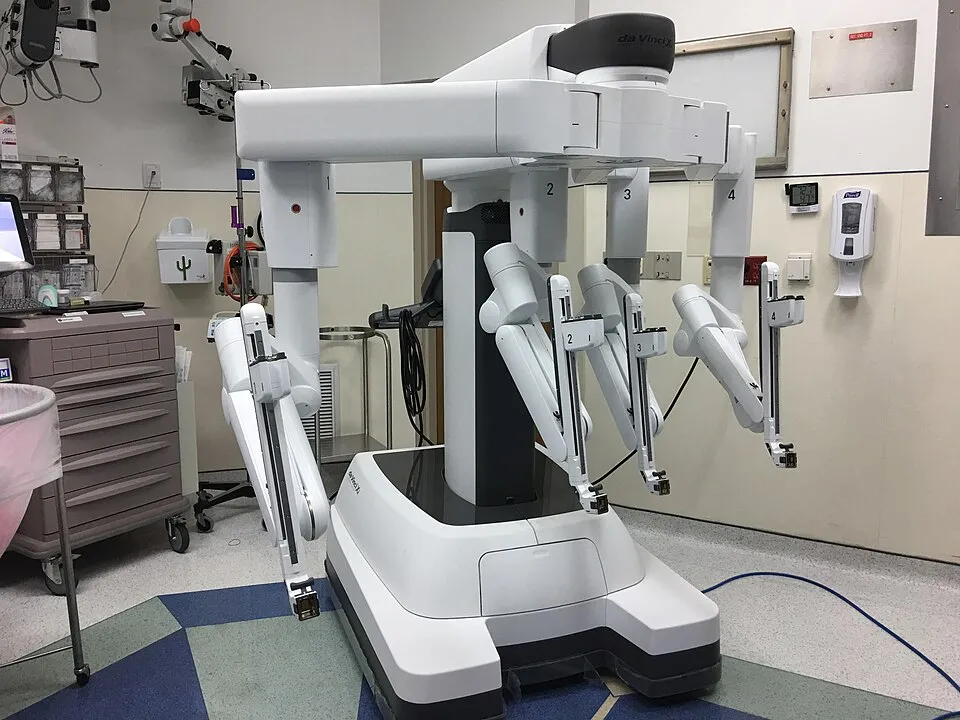
AI: Surgeons control today's robots; AI-led surgery is still in the lab.
- Surgeons did more than 3.1 million operations with da Vinci robots in 2025, using about 11,100 systems worldwide. The surgeon steers every move from a console. (sec.gov)
- In 2025 a Johns Hopkins robot, SRT-H, carried out a key phase of gallbladder removal on its own, after learning from surgery videos. It was tested on pig organs, not patients. (hub.jhu.edu)
RobSimmons223311, CC BY-SA 4.0 MiningGrowing fast
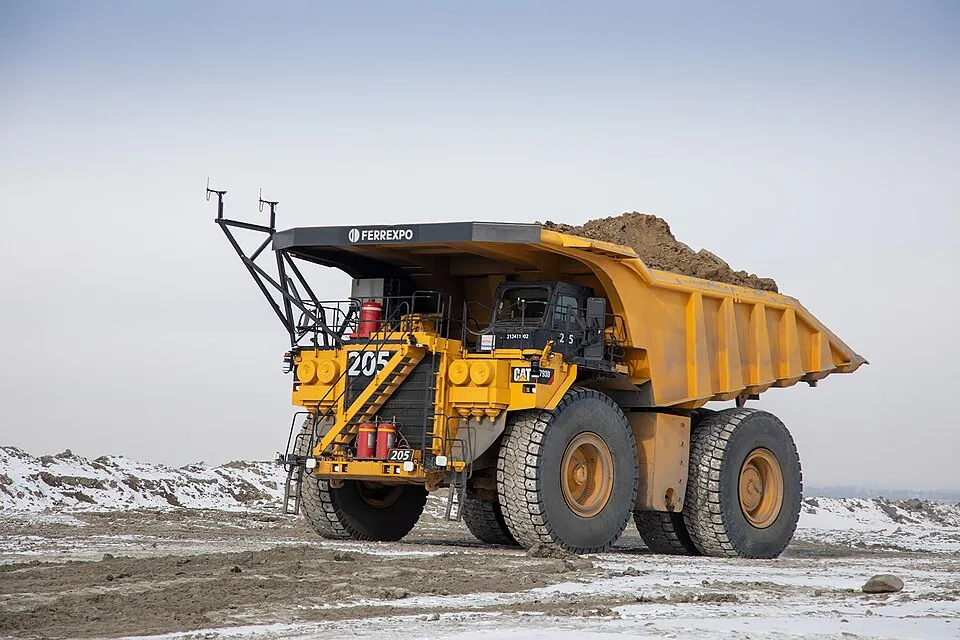
AI: Self-driving trucks run around the clock in big open-pit mines.
- 3,832 self-driving haul trucks were working at surface mines in July 2025, up from 2,080 a year earlier. China has the most (2,090), then Australia (1,024). (mining-technology.com)
MIKI Yoshihito from Sapporo City,Hokkaido., JAPAN, CC BY 2.0 Hotels and restaurantsGrowing fast
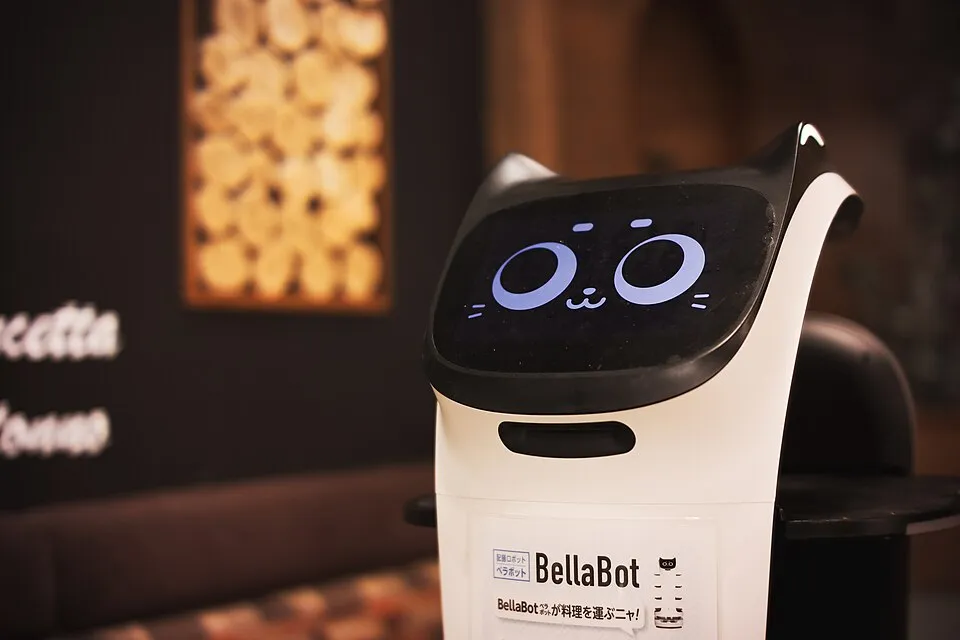
AI: Robots carry food and room deliveries; people still do the welcoming.
- Pudu, maker of the cat-faced BellaBot, says it has shipped over 70,000 service robots to more than 60 countries, used by chains such as KFC and Pizza Hut. (aap.com.au)
- Japan's Henn-na Hotel, famous for its robot staff, retired over half of its 243 robots in 2019 because they made more work for staff than they saved. (npr.org)
Archaeology and heritageEarly days
AI: Robots reach places people can't; AI helps put the past back together.
- In 2011 the Djedi robot crawled up a narrow shaft in Egypt's Great Pyramid and filmed red markings unseen for about 4,500 years. (robotics.leeds.ac.uk)
- Stanford's humanoid diving robot OceanOne dived about 100 metres to a French king's shipwreck in 2016 and brought back a vase. Its pilot could feel what the robot's hands touched. (spectrum.ieee.org)
- In Pompeii, the EU's RePAIR project uses AI to work out which fresco fragments fit together, and robot arms to assemble them. (aibusiness.com)
PaulineCant, CC BY-SA 4.0 FarmingGrowing fast
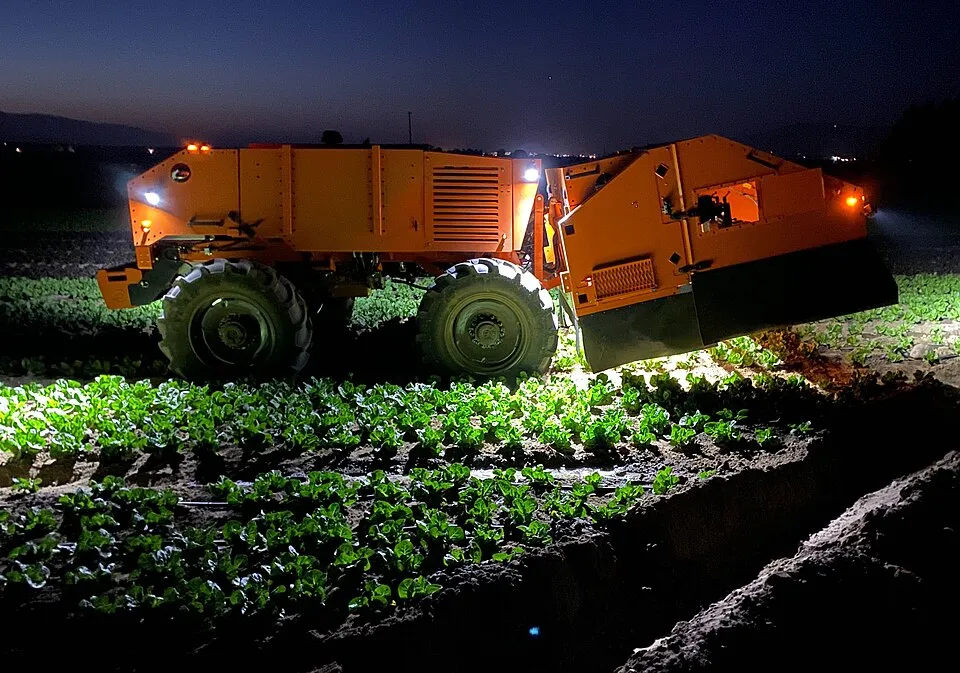
AI: AI cameras tell crops from weeds, plant by plant.
- Carbon Robotics' LaserWeeder uses AI to spot weeds and zaps them with lasers, with no weedkiller. The maker says it can kill over 100,000 weeds an hour. (asme.org)
Dllu, CC BY 4.0 RoadsGrowing fast
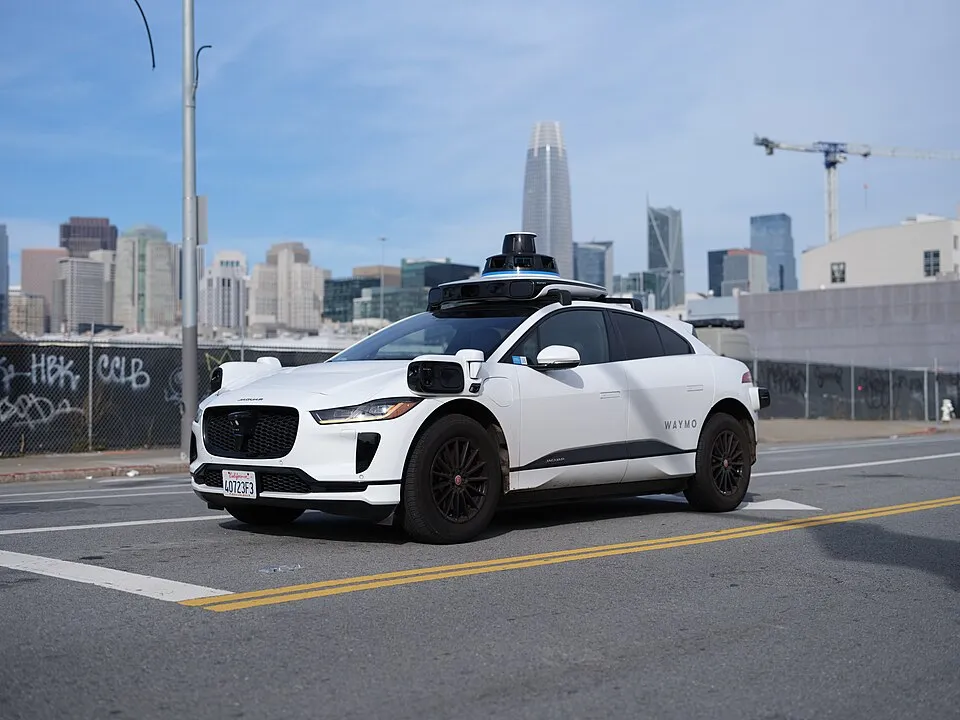
AI: A self-driving car is a robot: it sees, plans and acts on its own.
- Waymo was giving about 500,000 paid driverless rides a week across 10 US cities in early 2026, and aims for 1 million a week by the end of the year. (techcentral.ie)
NASA, Public domain SpaceGrowing fast
AI: Mars is too far away to steer live, so rovers drive themselves.
- NASA's Perseverance rover passed 45 km on Mars in October 2026, a record for any vehicle on another world. NASA credits its self-driving system, AutoNav, which maps hazards as it goes. (petapixel.com)
- Robonaut 2 became the first humanoid robot in space in 2011, testing how robots could one day share chores with astronauts. (universetoday.com)
Sayanesy, CC0 HomesEarly days
AI: Vacuums are everywhere; robots that do real chores are just arriving.
- Home humanoids are on pre-order: 1X's NEO costs $20,000, with first US deliveries promised in 2026. For chores it hasn't learned, a remote human operator can take over. (the-gadgeteer.com)
- Even iRobot, maker of the Roomba, struggled: it filed for bankruptcy in December 2025 and was sold to its Chinese manufacturer. (retaildive.com)
The humanoid race
Why human-shaped? Factories, homes and stairs are built for people, so a robot with arms and legs can, in theory, work anywhere we do. Here's where the best-known ones really stand. Not a ranking.
AtlasFactory pilot
Boston Dynamics (USA, owned by Hyundai)
The production version launched in January 2026. All of this year's robots went to Hyundai and Google DeepMind; Atlas is now learning to sort car parts at Hyundai's Georgia plant.
Source: bostondynamics.comFigure 03Factory pilot
Figure AI (USA)
Its predecessor loaded over 90,000 sheet-metal parts at BMW and was retired "with scars" in 2025. The new model is now back at BMW, sorting parts.
Source: interestingengineering.com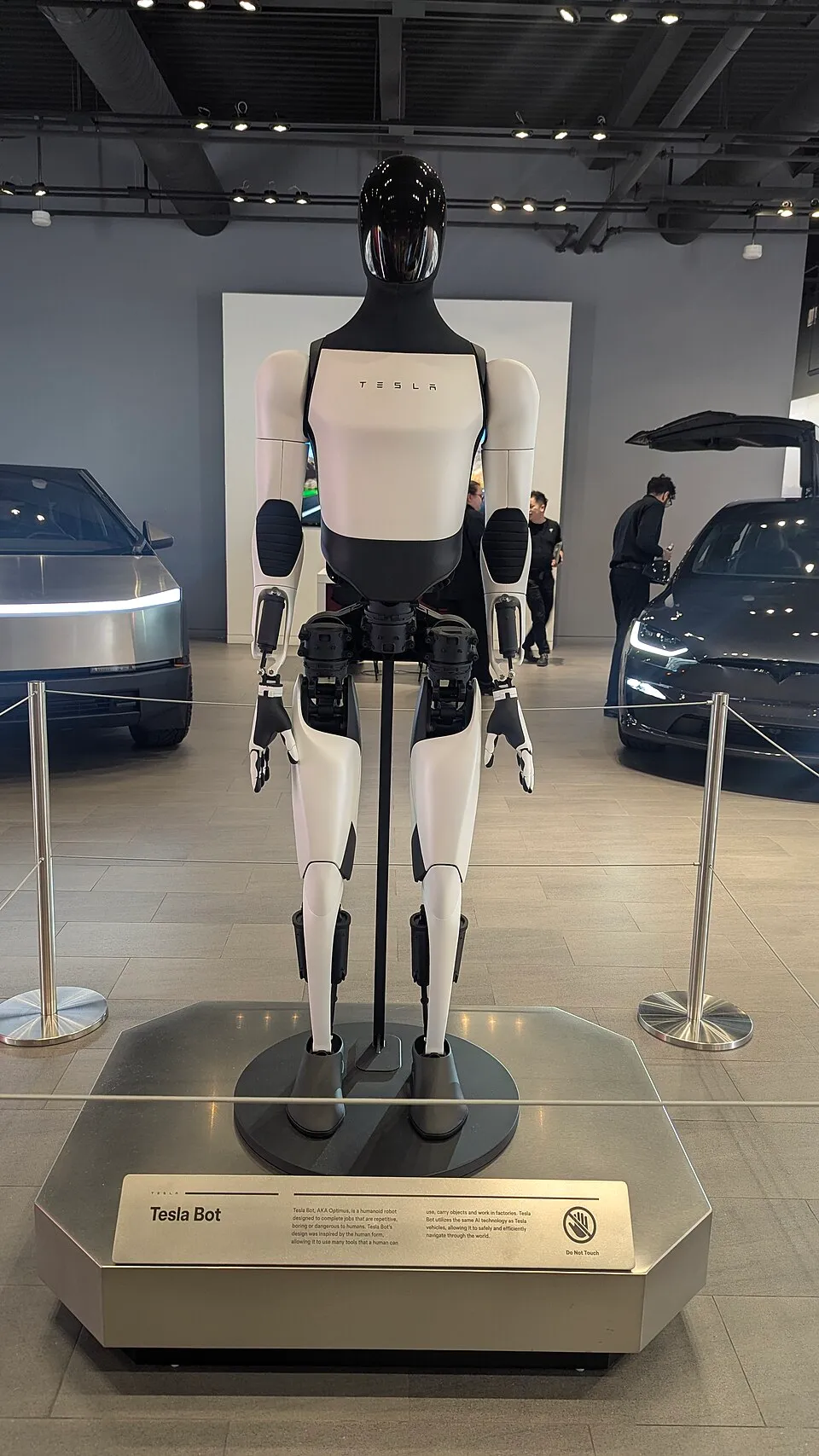
Sikander, CC BY-SA 4.0 OptimusIn development
Tesla (USA)
Elon Musk said Optimus would do useful work by the end of 2025; it didn't. Production at Tesla's Fremont factory was due to start in mid-2026, with the first robots used inside Tesla.
Source: tikr.comNEOPre-orders
1X (Norway and USA)
A soft, quiet humanoid for the home at $20,000 or $499 a month. Remote human operators help with tasks it can't do alone yet.
Source: the-gadgeteer.comG1 and othersOn sale
Unitree and other Chinese makers
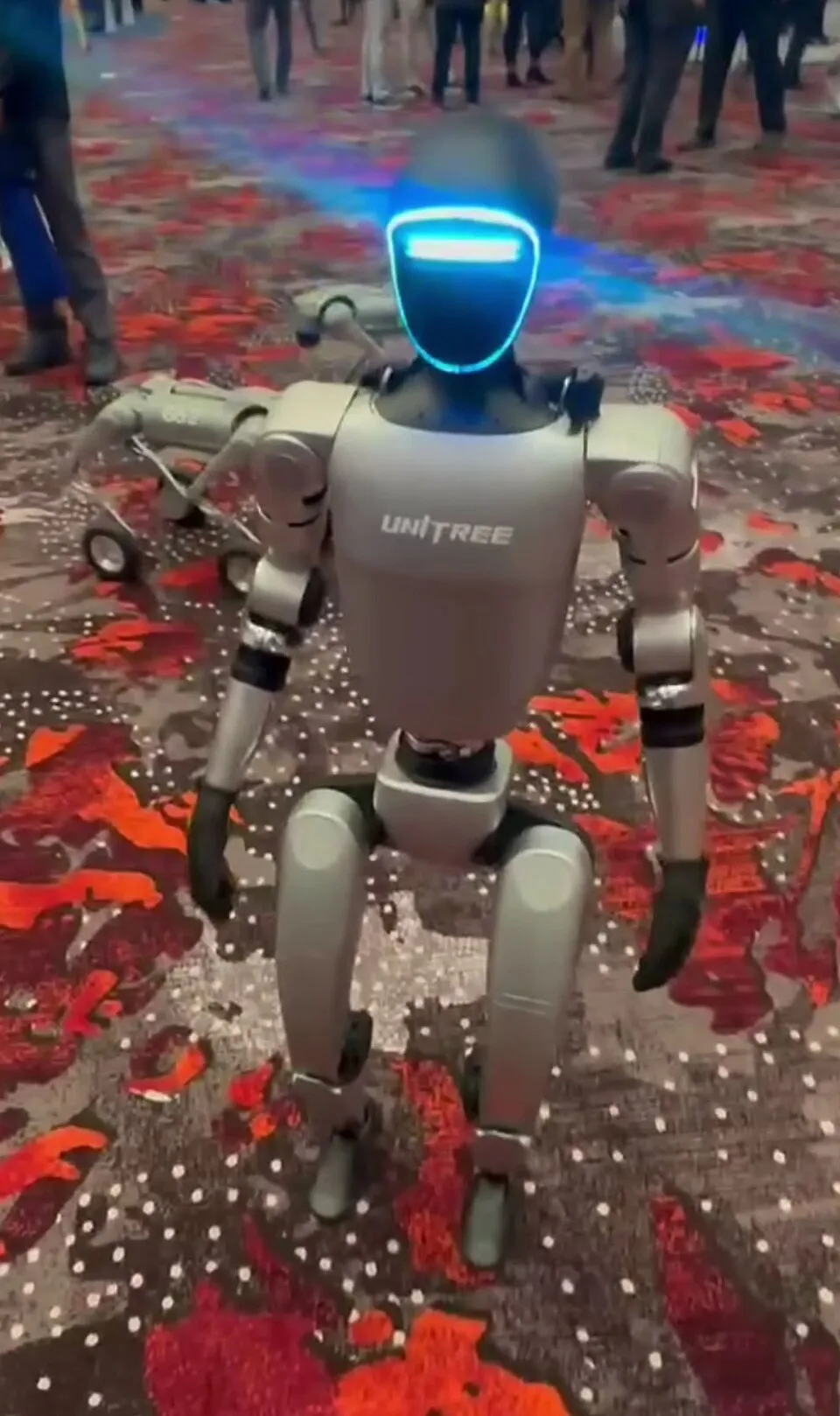
Chinese companies sell smaller humanoids to universities and developers, and show them off in public races and contests.
Source: unitree.com
Did you know?
- 2 hours 40 minutesThe winning time of the first humanoid robot half marathon, in Beijing in 2025. The fastest human took about 1 hour. The robot followed a human pacer, fell once and needed three battery changes.Source: theborneopost.com
- "Sorry, I didn't catch that"A robot assistant at Japan's Henn-na Hotel mistook a guest's snoring for commands and kept waking him up to ask him to repeat himself.Source: npr.org
- 1 robot per 10 workersSouth Korea has the most factory robots for its size: 1,012 for every 10,000 factory workers, according to the International Federation of Robotics.Source: fox5ny.com
- 350 years underwaterThe vase OceanOne recovered had lain on the seabed since 1664. Its pilot was the first person to touch it in more than three centuries, through the robot's hands.Source: spectrum.ieee.org
Hype vs reality
- Everyday chores are still hardAI that aces PhD-level exams succeeds at only about 12% of everyday household tasks when it controls a robot, according to Stanford's 2026 AI Index. Folding laundry is harder than chess.Source: hai.stanford.edu
- Some demos have a human behind themRobots are often helped by remote operators or human guides, as with NEO's remote "expert mode" and the half marathon's pacer. Ask how much a robot did on its own.Source: the-gadgeteer.com
- Deadlines slipHumanoid timelines often move: Tesla's Optimus missed its 2025 goal, and Hyundai's full Atlas roll-out on its production lines is reported to start in 2028.Source: eweek.com
How we chose the evidence
We used the International Federation of Robotics, company filings and announcements, university press releases and reliable news coverage, and we label company claims as such. All photos are freely licensed, with credits under each one. Robotics moves fast, so we review this page every quarter. For the software side, see AI agents; for the companies behind AI, see AI unicorns.